
1. German Museum Returns Painting to Jewish Estate
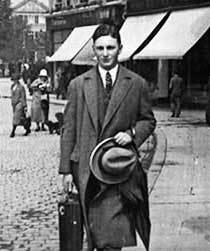 That was the heading of a story that appeared in yesterday’s New York Times (December 22). A German museum has returned a 15th-century Renaissance painting to the estate of a Jewish art dealer who was forced to sell it under duress in 1935.
The painting, Virgin and Child, attributed to the Master of Flémalle, is the 10th work of art to be returned to the estate of Max Stern, since the dealer’s beneficiaries – Hebrew University in Jerusalem, and Concordia and McGill Universities in Montreal – started a restitution project in his name in 2002.
The New York State Holocaust Claims Processing Office, which began working with the Stern project in 2005, helped gather and present the documentation that proved the claim to the museum, Staatsgalerie Stuttgart.
Prohibited by the German government from buying and selling art because he was Jewish, Mr. Stern was forced to sell hundreds of artworks for a pittance in order to buy exit permits for his family. Mr. Stern, who died in 1987, ultimately settled in Montreal, where he became a prominent art dealer.
The painting was turned over in a ceremony at the Canadian Embassy in Berlin on Tuesday.
2. The Promotion of Emily Carr
Like the author of this blog, Max Stern spent time in Canadian internment camps in 1940 and 1941. (He was not the only Stern there and was therefore identified as the Kunst-Stern – The Art-Stern.)
One of his many contributions to Canadian art was the recognition of Emily Carr at a time when she was not well known outside British Columbia.
In 1944, he held an exhibition of her work in Montreal. At least one friend from recent days behind barbed wire who acquired one of Carr’s great paintings at this exhibition was the pianist John Newmark.


Fascinating. Thank you Eric.