
Extracts from a column by Nicholas Kristof in The New York Times, August 14
What use could the humanities be in a digital age?
University students focusing on the humanities may end up, at least in their parents’ nightmares, as dog-walkers for those majoring in computer science. But, for me, the humanities are not only relevant but also give us a toolbox to think seriously about ourselves and the world.
I wouldn’t want everybody to be an art or literature major, but the world would be poorer – figuratively, anyway – if we were all coding software or running companies. We also want musicians to awaken our souls, writers to lead us into fictional lands, and philosophers to help us exercise our minds and engage the world.
Skeptics may see philosophy as the most irrelevant and self-indulgent of the humanities, but the way I understand the world is shaped by three philosophers in particular.
First, Sir Isaiah Berlin described the world as muddled and complex, with many competing values yet no simple yardstick to determine which should trump the others. We yearn for One True Answer, but it’s our lot to struggle to reconcile inconsistent goals. He referred to this as pluralism of values.
Yet Sir Isaiah also cautioned against the hand-wringing that sometimes paralyzes intellectuals, the idea that everything is so complex, nuanced and uncertain that one cannot act. It’s the idea pilloried by Yeats: “The best lack all conviction, while the worst are full of passionate intensity.”
Second, John Rawls offers a useful way of thinking about today’s issues such as inequality or poverty, of institutionalizing what our society gravely lacks: empathy. He explores basic questions of fairness, leading to a compelling explanation for why we should create safety nets to support the poor and good schools to help their kids achieve a better life.
Third, Peter Singer of Princeton University has pioneered the public discussion of our moral obligations to animals, including those we raise to eat. Singer wrote a landmark book in 1975, Animal Liberation, and cites utilitarian reasoning to argue that it’s wrong to inflict cruelty on cows, hogs or chickens just so that we can enjoy a tasty lunch.
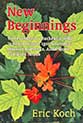 Eric Koch’s new book, New Beginnings, was launched on September 20. The book is available from

I agree with you in spirit, though I wonder if today’s youngsters even bother listening to quality music or reading meaningful literature (aka, if a tree falls in the forest…).
How can I not respond? Of course he is completely right about the relevance of philosophy in framing our modern understanding, issues and debates. Although there are other philosophers one might cite who have set the framework for Berlin, Rawls and Singer — from Socrates to Locke, Kant to Hegel…. and so many more.
And what is wrong with being a dog walker?
Nothing, and I don’t think Eric is presuming to say there is anything wrong with it. I think he is just making an educated guess that most parents who spend tens of thousands (and, in American terms, hundreds of thousands, in some cases) for a 4-year degree - wouldn’t need to be weighed down by so much debt - if they knew their kid was going to end up being a dog walker.
I checked the horoscope and apparently we are leaving an area where religion is very important. Thank God! We are now entering a period where the arts will rule. Keep studying the humanities it will come in handy.
sounds good. Would either a scientist or a philosopher consider that a reliable source?