
 Excerpted from The Big, Bad Book of Botany: The World’s Most Fascinating Flora by Michael Largo. Out now from William Morrow, an imprint of HarperCollins Publishers.
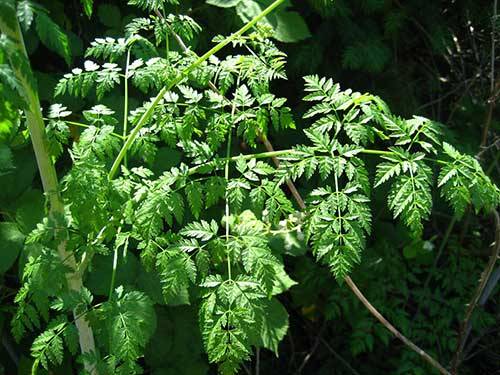
According to Christian mythology, the hemlock plant became poisonous after growing on the hillside of Jesus’ crucifixion. When his blood touched the plant, it turned forever toxic.
However, the most infamous poisoning by hemlock is attributed to the Greek philosopher Socrates, who chose a hemlock drink as his preferred means of death – most sources say that he drank it mixed with water or as a tea. In the Phaedo, Plato claims that Socrates first felt a numbing in his limbs, after which the sensation overtook his entire body. Socrates maintained full awareness throughout his poisoning and even continued to speak to those around who witnessed his death. His last words reportedly were: “Crito, we owe a cock to Asclepius. Please, don’t forget to pay the debt.”
Socrates willingly drank the poison after being sentenced to death for his speeches and for his belief in humanistic and democratic principles. When he was ordered to publicly deny his ideas or die, he chose death. However, as a respected gentleman, the court gave him the right to pick the manner in which he wished to have his death sentence carried out. Hemlock tea was his first choice.
In Socrates’ last moment of lucidity he mentions the god Asclepius, a mythological deity noted for healing. Scholars surmise that Socrates conceived of his death as a freedom of his soul from the unreasonableness of humanity and the confines of his body. However, Plato’s dignified description of Socrates’ death might be a bit romanticized, since hemlock poisoning would be a lot more painful, accompanied by a convulsive gasping to breathe.
Source: Slate Magazine, August 23
 Eric Koch’s new book, New Beginnings, was launched on September 20. The book is available from

The hemlock plant is a very common (large) weed, here in New Jersey, and looks a lot like wild parsnip. Just thought I’d mention that!
Yes, but where is Socrates?
from an article dated July 2007: “Conditions the last few years have been especially favorable for two weeds in the parsnip family-wild parsnip (Pastinaca sativa) and poison hemlock (Conium maculatum).” More at
http://www.ipm.iastate.edu/ipm/icm/2007/7-9/poison.html