
With a few exceptions, which prove the rule, in English all words beginning with sn have a negative content, for example, snort, snit, snarl.
Readers are invited to give a rational explanation.
With a few exceptions, which prove the rule, in English all words beginning with sn have a negative content, for example, snort, snit, snarl.
Readers are invited to give a rational explanation.
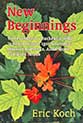 Eric Koch’s new book, New Beginnings, was launched on September 20. The book is available from Mosaic Press. Eric Koch’s new book, New Beginnings, was launched on September 20. The book is available from Mosaic Press. |


But some of the exceptions have a very pleasant connotation. I occasionally enjoy a snort when I snuggle in an easy chair, especially when it is snowing outside.
Well done, Horace. What about s q - e.g., squint? Exception: square. But when it applies to persons, in which case it’s also negative.
Perhaps the negativity of so many ‘sn’ words comes from the sound, connected with the hiss of the snake (the serpent), the cause of our expulsion from the Garden of Eden, thereby snatching happiness from human beings forever.
But, there are more exceptions: snooze, snazzy, snorkel, snowbirds, snapshots, snapdragons and the best of all, snog, which may be derived from snug, to lie close with another, which one has to do to snog, that is, to engage in a passionate kiss.
Could ‘sn’ inverted into the ‘US’ have something to do with it?