
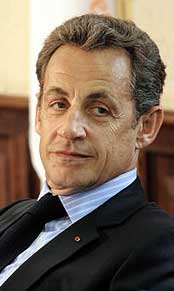
 In Tuesday’s Globe and Mail (March 13), Doug Saunders wrote this sentence in a report on the French election:
“Both French and German observers said they didn’t believe Mr. Sarkozy has any intention of carrying out his new promises – and that his dishonesty would be his most welcome quality.”
He was referring to Sarkozy’s speech on Monday in Paris in which he promoted trade protectionism, and attacked immigration and Islam. Most alarmingly to Germans, he threatened to cancel one of the key planks of European unification, the Schengen Treaty, which eliminates borders and allows free movement of goods and people among 26 countries.
It seems that both French and German observers consoled themselves with the understanding that a redeeming feature of the president of France was his dishonesty.
 Eric Koch’s new book, The Weimar Triangle, is available at Indigo-Chapters and in your local bookstore.


The proverbial “Honesty is the best policy” uses the superlative “best”. Does this not imply that something less than honesty can be good or better? Perhaps his dishonesty is not to be condemned.