
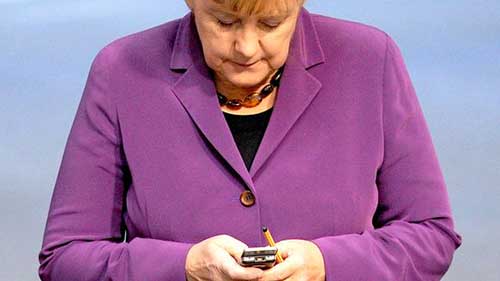
The NSA has been listening to the German chancellor’s smartphone. This, comments Ludwig Greven in Zeit Online (October 24), would be – if it turns out to be true – a serious political and diplomatic affront.
But, in view of everything we have heard by now about the NSA’s activities, it should not surprise anybody. Once they listen to the communications of allied embassies, why not also to the heads of government? The only thing that is surprising, the commentator writes, is that Merkel only reacts now when she is personally involved.
It would have been her duty to protest – which she did not – when it was discovered that the Americans were listening to private communications of millions of German citizens. Their fundamental rights are as valuable, he writes. as those of the chancellor. At the time when Edward Snowden made his revelations, the government thought the matter was grossly exaggerated. They did not react on the grounds that they did not wish to disturb friendly transatlantic relations.
• • • • •
In The New York Times (October 24), Roger Cohen writes:
“…Merkel is measured. For her to lift the phone and go public with her criticism leaves no doubt she is livid. As she said last July, ‘Not everything which is technically doable should be done.’ This, on the now ample evidence provided by the former National Security Agency contractor Edward Snowden, is not the view of the NSA whose dragnet eavesdropping has prompted fury from Paris to Brasília.
“Obama, in his cool detachment, is not big on diplomacy through personal relations, but Merkel is as close to a trusted friend as he has in Europe. To infuriate her, and touch the most sensitive nerve of Stasi-marked Germans, amounts to sloppy bungling that hurts American soft power in lasting ways. Pivot to Asia was not supposed to mean leave all Europe peeved.”


With the ‘Five Eyes’ among them, it’s now the shady world, it seems, of ‘who-can-crack-whom’ … faster.