
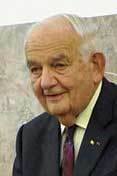
 The eminent 89-year-old French political scientist Alfred Grosser was invited to address the Bundestag in Berlin on Thursday, July 3, in a ceremony commemorating the outbreak of WWI.
Born in Germany, he was eight when his family left shortly after Hitler came to power. His father, a Jewish doctor who had fought in WWI, decided to leave immediately after he was expelled from the association of war veterans even before he was banned from his hospital and from the university where he had been teaching. He died in France soon after he arrived. Since 1945, his son, Alfred, who had fought in the Resistance, devoted himself to the cause of French–German reconciliation.
Germans today, he said in his speech, had every reason to be proud of their country. The end of WW2 had fundamentally changed the nature of Germany. The total defeat of 1945 had produced a totally different Germany. After 1918 it was still possible for the former war leader – and future president – Paul von Hindenburg to say publicly that Germany had not been defeated but had been stabbed in the back – a view shared by Adolf Hitler.
French–German relations could only have prospered because the Federal Republic was fundamentally different from Hitler-Germany. It was built on the ethical principles implicit in the rejection of Hitler and Stalin, not on the primacy of the Nation. Unfortunately, this idea had not spread to other countries. In some, the trend today was in a different direction – also, he said, “a little bit, in your country”.
Militarism was no longer all-pervasive, as it had been before 1914. Then, a patriotic couple would, during the wedding night, proceed to the main business at hand only after having prayed for a soldier in the Kaiser’s army.
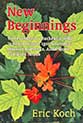 Eric Koch’s new book, New Beginnings, was launched on September 20. The book is available from
