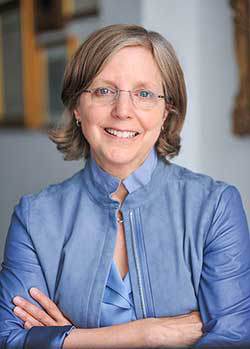
 Deborah Coyne is a constitutional lawyer and the mother of Pierre Trudeau’s only daughter. In April 2012, she announced her candidacy for the leadership of the Liberal Party. Trudeau’s son Justin won it. Her views were published in the Huffington Post on September 21.
The proposed Charter of Quebec Values is rightly recognized both inside and outside Quebec as a cynical ploy by a weak sovereigntist government to create an issue that may help divide Quebec from Canada.
Playing to a shrinking base, the PQ tries to define “secularism” as a distinctive Quebec value, versus “multiculturalism” as an alien Canadian value that is undermining Quebec society. This, of course, creates a false debate – because all Canadians support a secular liberal democracy where we reasonably accommodate our differences.
Or do we?
We are building one of history’s most fascinating, diverse and cosmopolitan societies. And yet, Canadians have yet to have a national debate about the essence of Canada.
In 1982, when our Charter of Rights and Freedoms was adopted, we settled for a threadbare, placeholder preamble that is almost laughable: “Whereas Canada is founded upon principles that recognize the supremacy of God and the rule of law.”
For better or for worse, politicians at the time did not consider it possible to have the kind of extended debate needed to write something more inspiring. No one is entirely clear as to how this particular wording came about. Fortunately, given the fundamental principle of the separation of church and state, constitutional scholars and judges generally accord little or no legal meaning to it. Indeed, Pierre Trudeau is on record as stating at the time that “I don’t think God gives a damn whether he’s in the constitution or not.”
Whereas the Charter is now viewed as a model for many other nations, the preamble is not surprisingly considered only a quaint curiosity. So, while South Africa’s 1996 Constitution certainly reflects a Canadian influence, it opts for a stirring preamble starting with “We the people of South Africa….”
A national debate around a new constitutional preamble is long overdue. We need an inspiring and inclusive preamble that accurately describes our great nation, that celebrates our diversity and what we share in common, and expresses our collective aspirations for our future.
A new preamble would also address the constitutional recognition of Quebec as a distinct, free and democratic society such as in accordance with the principles of both the Canadian and the Quebec Charters, and with a unique contribution to Canada’s constitutional identity. Most federalists in Quebec, including the Quebec Liberal Party leader, Philippe Couillard, advocate the further recognition of Quebec’s distinctiveness in some way in the Constitution before a vote in the National Assembly in Quebec endorsing the 1982 Constitution Act. Such a vote is not legally necessary, but is certainly politically desirable.
With all Canadians engaged in drafting a new preamble, the effort at constitutional change would be a unifying force, not a divisive one. To maximize success, however, we must recognize two lessons from recent constitutional debates. First, it can be confusing and unmanageable to undertake multiple constitutional reforms at the same time. Linking different reforms can be unprincipled and deprive people of a chance to decide each on its own merits. So a new preamble should be addressed separately.
Second, the Constitution belongs to the people of Canada, who must be consulted directly with respect to all significant reforms by way of referendum, a constitutional convention established with the 1992 Charlottetown referendum. If discussions do proceed simultaneously on different subjects, there should be a separate referendum question on each.
Seen through this lens, the divisive PQ secularism initiative in fact provides our national leadership with a valuable opportunity to invite Quebecers to engage with all other Canadians in a broader debate – one that brings us together to confront the challenges of the 21st century and build a country that matches our highest aspirations for the future.

 In the Globalist, Uwe Bott writes (October 14):

