
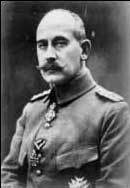
 On November 9, 1918, the Chancellor, Prince Max von Baden (pictured here), announced the abdication of the Kaiser. Prince Max himself was forced to resign later the same day when it became clear that only Friedrich Ebert, leader of the Social Democrats, could effectively exert control. Ebert became the first president of the republic.
Recently, a biography of Prince Max appeared, written by the well-known historian Lothar Machtan. In an interview with Die Welt (January 2), Machtan sketched out an intriguing possibility. Prince Max, aged fifty-three, was a much respected liberal who was appointed Chancellor in October. He was critical of the way the General Staff was conducting the armistice negotiations.
At the same time, he was getting ready to persuade the discredited Kaiser to abdicate voluntarily and make room for the creation of a modern democratic parliamentary monarchy, perhaps headed by a young grandson of the Kaiser until the grandson reached the age of 21. Until that time he, Prince Max, would be prepared to serve as a transitory Reichsverweser (administrator-in-chief) if nobody else suitable was selected for that job. He had the support of Friedrich Ebert and many others.
The plan collapsed when, in early November, Prince Max suffered a nervous breakdown. A contributory cause for this was the interference by the Kaiser’s wife who threatened to blackmail Prince Max, a closet homosexual. This threat paralyzed the prince.
The point is that had Prince Max been able to pull this off, Germany might have been spared the formation of a republic that from the very beginning was hated by the right wing and by large sections of the population. The Kaiser was discredited but the institution of the monarchy was not.
The Nazis would not have got into power and there would have been no WWII.


Being a parliamentary monarchy rather than a republic may have removed some of the symbolic targets of the German right but it would likely not have made a difference to Germany’s economic and social situation in the 1920s which was the primary cause of the rise of the Nazis. It’s also debatable that Max would have been unable to prevent the revolutionary wave of 1919 (indeed, perhaps the Spartacists would have been joined by the left wing of social democracy and succeeded in 1919 rather than failed?
Very true - that is debatable. These are good points.