
Tag Archives: Hindenburg

Has a Military Coup Ever Saved a Democracy?

It is hard to think of a case when it did. But there is a situation when it nearly did.

The Weimer Republic (1919–1933) was a democracy, with the important qualification that, just as in the Kaiser’s day, the army had the last word. The elected (in 1925) president of the republic was the venerable Field Marshall Paul von Hindenburg, the incarnation of Prussian militarism.

At the end of January 1933, just before Hindenburg was about to appoint Hitler chancellor, there was a real possibility of an army coup to prevent that.
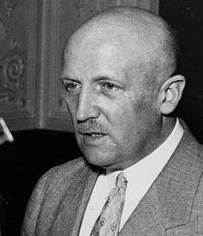
Kurt von SchleicherTo quote from Henry Ashby Turner’s Hitler’s Thirty Days to Power: “In a climate of crisis, with wild rumours running rampant that Schleicher [pictured here] was moving troops into Berlin to depose Hindenburg, Papen convinced the president that there was not a moment to lose, and to appoint Hitler chancellor. The next day, he did.”

General Kurt von Schleicher, who was chancellor, had lost the president’s confidence and was being outmaneuvered by his predecessor Franz von Papen, who hated him.

A military regime headed by von Schleicher might well have preserved democracy. After all, the army had tolerated the Weimar Republic since November 1918. As it turned out, the worst things happened.

One of them:

On June 30, 1934, von Schleicher and his wife were among those Hitler had murdered during the “Night of the Long Knives.”

Thoughts About North Korea

China’s leader Xi Jinping said no country could be allowed to throw the region “into chaos for selfish gains.”

• • • • •

At the Korean Central News Agency, we found this: “Displayed in the venue are photos showing the outstanding leadership and noble personality of Kim Jong Un, who opened a new chapter in the cause of immortalizing the preceding leaders and has brought about a turn in the drive to bolster up national defence capability, build an economic power and improve the people’s living standard by arousing all the service personnel and people to the implementation of behests of leader Kim Jong Il.”

• • • • •

British Foreign Secretary William Hague has called for calm over the North Korean crisis. Despite the “paranoid rhetoric” from Pyongyang, it was important to remain “firm and united,” he said, warning of the dangers of a “miscalculation” by North Korea.

• • • • •

In August 1914, the German generals “miscalculated.” They urged their shallow and vacillating Kaiser to unleash a pre-emptive war, having convinced themselves that it would be over by Christmas. For four years it was by no means obvious that the war was suicidal: they nearly won it. The Americans turned the tide. The generals had been so sure of their forthcoming victory that they were unprepared for defeat. Hindenburg, like Hitler after him, denied that Germany had lost the war and blamed the peacemakers for having made peace.

• • • •

The Economist suggests that the best way to deal with North Korea’s increasingly provocative rhetoric is to face down the country’s leader Kim Jong Un. Kim, who has said that Pyongyang’s nuclear capabilities are non-negotiable, “has raised the stakes [and] it is time to get tougher with the nastiest regime on the planet,” writes the paper. In addition, to destabilize the country from within, the Economist prescribes engaging with North Korea’s new merchant class and other possible agents of change, stopping all commercial favors towards the Kim regime and pressuring China to choke off Pyongyang’s sources of cash.

Sources: BBC (April 5 and 7), The Economist quoted in the current Time Magazine