
Tag Archives: Holocaust

The Mastermind of the Holocaust May Have Been Buried in a Jewish Cemetery in Berlin

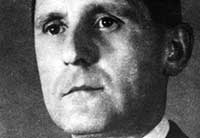
HeinrichMüllerEichmann’s boss, Gestapo Chief Heinrich Müller, had been in the bunker with Hitler in April 1945. Nothing definite was known about his death.

He had participated in the Wannsee Conference on January 20, 1942, when the murder of Europe’s Jews was decided.

Holocaust historians say that Western investigators looked for Müller intensively for years after 1945, and there were reports placing him everywhere from Czechoslovakia to the Soviet Union or even Brazil.

Now, the question of Müller’s fate has taken a disturbing twist, as Professor Johannes Tuchel, head of an association that watches over memorials to German resistance fighters, claims to have uncovered a document indicating that Müller was killed, probably on May 1, 1945, hastily buried in a provisional grave near the Nazi Air Force ministry, and later reburied in a mass grave in the Jewish cemetery in Mitte, in the heart of Berlin.

While the claim is not definitive – lacking, for instance, any forensic verification – it was credible enough to stir a mixture of sorrow, outrage and shock in this city where so much blood and treasure have been spent, and beyond.

Efraim Zuroff, chief Nazi hunter of the Simon Wiesenthal Center, was incredulous when reached by telephone. “I can’t think of a worse desecration of a Jewish cemetery than to bury Heinrich Müller there,” he said.

Professor Tuchel said in a telephone interview that he stumbled on the discovery after investigating Müller’s role in the suppression of a rebellion in the Moabit district of central Berlin on April 22–23, 1945. As the Nazi Reich was crumbling under sustained Allied bombing, and Soviet tank and infantry advances, the Gestapo leader, Professor Tuchel said, ordered 18 resistance fighters in Moabit shot.

His interest piqued, Professor Tuchel said, he scoured archives and found out that Müller was killed in the dying days of the war in May 1945, and buried and reburied, he said.

An estimated 70,000 civilians and soldiers are said to have been killed in the last three weeks of the war in Berlin. In the months after fighting ended, each city district organized non-professional teams of gravediggers to collect corpses and bury them in mass graves, Professor Tuchel said, adding that there were 16 such graves containing an estimated 2,700 bodies in the Mitte Jewish cemetery, which was not used for burials after 1829.

It is the resting place of the 18th-century philosopher – and grandfather of the composer – Moses Mendelssohn.

Source: The New York Times, October 31
The Story of Albert Göring, Hermann’s Younger Brother

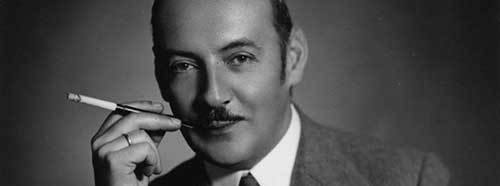
Albert GoeringAlbert Göring must have been stunned when the American soldiers who tried to arrest him in 1945 did not believe that he had saved many Jewish lives. (Later he was arrested and imprisoned.) As proof of his actions, he compiled a list of thirty-four names. He neatly documented them, previous places of residence, professions, citizenships and current places of residence of “people whose lives or existence I put myself at risk (three Gestapo arrest warrants) to save” and specified their “race” and the “type of help” he had provided. The list includes prominent individuals such as Kurt Schuschnigg, the last Austrian chancellor before the 1938 annexation, and the wife of opera composer Franz Lehár, who was Jewish and No. 15 on the list of people Göring had saved.

The Göring brothers remained loyal to each other. “He is my brother,” Hermann would say, reminding the Gestapo thugs that family members were off limits.

In some of the photos, Albert Göring looks as if he had just emerged from a coffeehouse in the Weimar Republic, with his pencil moustache and cigarette holder, and his misty-eyed and melancholy gaze.

Albert had been imprisoned for a year when a new interrogation specialist named Victor Parker reported for duty. As he was reading the list of thirty-four individuals, he paused when he saw the name Lehár. By a stroke of luck, the composer’s wife was Parker’s aunt. The Americans finally believed the story their prisoner had told them and released him from custody. But he wasn’t freed altogether. Instead, they extradited him to Prague, just in case there was any evidence against him there.

Göring ended up in Pankrác Prison, together with German war criminals, looters and murderers. He was put on trial in a Czechoslovakian people’s court.

As a German named Göring, being put on trial in Prague in 1947 was almost tantamount to a death sentence. But many workers from the Škoda plant and resistance fighters appeared in court to praise the defendant. One authoritative letter to then-President Edvard Beneš, stated that “hundreds of men and women” had Albert Göring to thank for “being rescued from the Gestapo, concentration camps and executioners.” The court acquitted him in March 1947.

Göring spent his last few years living in relative poverty in an apartment building with his former housekeeper, whom he married shortly before his death. He died in Munich on December 20, 1966. His grave in Munich’s Waldfriedhof cemetery no longer exists. It was leveled in 2008.

Unconfirmed rumours suggest that Albert may possibly have been Hermann’s half-brother, the result of an affair between their mother and a doctor of Jewish origins.

Albert is a candidate for being named a Righteous Gentile by the Yad Vashem Holocaust Memorial in Jerusalem.

Source: Spiegel Online, March 7