
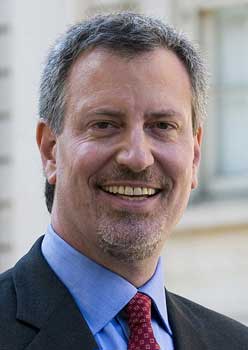
 Inequality is a dominating theme in contemporary politics. That is why the election of Bill de Blasio in New York is significant. A majority of the voters want a change from the One Percenter – Michael Bloomberg.
In an essay that appeared in The New York Times on November 1, the writer Cynthia Freeland – the Liberal candidate in the coming by-election in Toronto Centre – analyzes the current battle between Plutocrats and Populists. She quotes two business writers, Matthew Bishop and Michael Green, who have coined the phrase “philanthrocapitalism” to describe a novel approach in which plutocrats flex their political muscle: activist engagement with public policy and social problems. Bloomberg is a philanthrocapitalist. So are Bill Gates and George Soros. However respected and admired they are, radical ideas, particularly ideas explicitly hostile to elites and technocratic intellectuals, are gaining traction. It is in that light that de Blasio’s victory must be seen.
“As this populist wave crashes in on both sides of the Atlantic,” writes Cynthia Freeland, “the plutocrats, for all their treasure and their intellect, are in a weak position to hold it back….
“People might not mind that if the political economy were delivering for society as a whole. But it is not: wages for 70 percent of the work force have stagnated, unemployment is high and many people with jobs feel insecure….
“And for more and more people, technocratic paternalism seems at best weak broth and at worst an effort to preserve the rules of a game that is rigged in their favor. More radical ideas, particularly ideas explicitly hostile to elites and technocratic intellectuals, gain. Mr. de Blasio will be the next mayor of New York because he built a constituency among those who are losing out and those who sympathize with them. Politics in the winner-take-all economy don’t have to be extremist and nasty, but they have to grow out of, and speak for, the 99 percent. The pop-up political movements that come so naturally to the plutocrats won’t be enough.”


