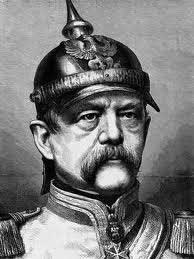
In the years 1871–1890, Bismarck dominated Europe, as Angela Merkel does now. But she lacks one outstanding feature of Bismarck’s character – the capacity to hate.
There were eight years left to him after the ambitious young Kaiser Wilhelm II fired him in 1890 in order to be his own Bismarck. As the creator of a united Germany, he was a legendary, hugely popular figure who openly despised the man who fired him and, in his retirement on his estate Friedrichsruh near Hamburg, used his connections with the press to cause him as much harm as possible.
Bismarck narrowly escaped a visit from the Kaiser on his deathbed – by dying before the Kaiser could come – but on one occasion could not prevent an imperial demand to come to dinner, at a few hours notice. The Kaiser, always eager to present an image of treating the great man with deep respect, arrived with a large retinue. A banquet for eighteen was duly served: several courses and innumerable bottles of champagne and cognac. Bismarck, in a wheelchair, barely managed to refrain from poisoning him.
In 1914, Bismarck would have been ninety-nine. No one will ever know if he could have prevented the disaster if he had been able to serve as chancellor for another twenty years. But one can say that the Germany he had created in 1871 was a militarist autocracy. He always wore a uniform when addressing the Reichstag. Without Bismarck, Germany could have become a parliamentary democracy run by non-hating, peace-loving politicians like Angela Merkel.